
gRPC vs. REST: The API Showdown
Kubenatives Newsletter - Edition #17


Beyond the Hype: A Deep Dive into Protocol Wars
REST and gRPC dominate the API landscape, but the usual "REST is simple, gRPC is fast" chatter doesn’t cut it for those of us knee-deep in system design.
Let’s peel back the layers—protocol mechanics, serialization quirks, operational overhead—and see what these contenders really bring to the table. Buckle up; this isn’t your average rundown.
The Machinery Under the Hood
REST: HTTP/1.1’s Legacy Warrior
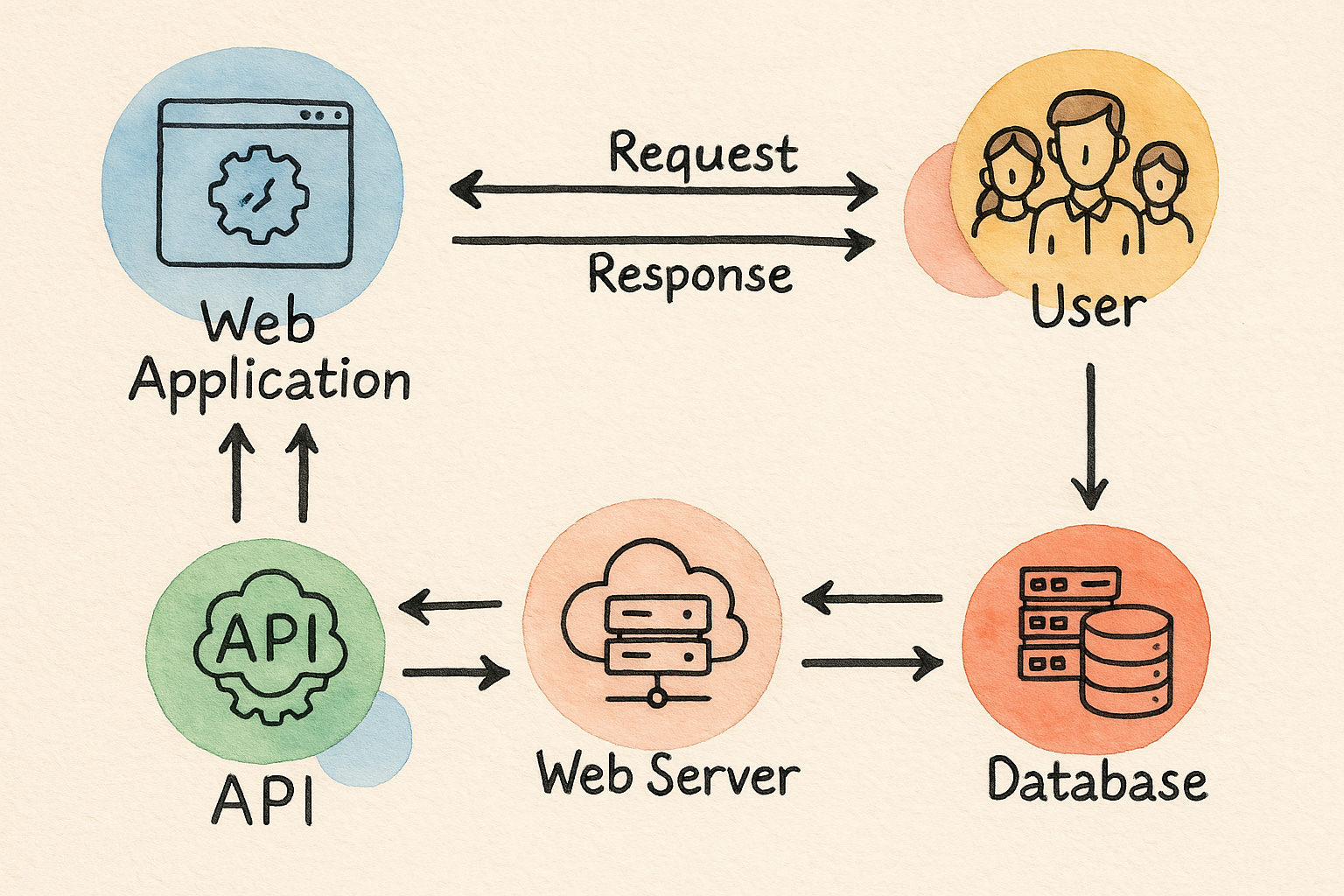
REST isn’t a protocol—it’s an architectural style riding HTTP’s coattails. Most implementations lean on HTTP/1.1, with its request-response model, text-based headers, and verbose payloads (usually JSON). Statelessness is its gospel: every call is a clean slate, relying on URIs and verbs to map resources.
But HTTP/1.1’s single-request-per-connection model drags performance under load—think head-of-line blocking and redundant header bloat. Enter HTTP/2 (optional for REST), which adds multiplexing, but adoption’s spotty, and JSON parsing still chugs on large datasets.
gRPC: HTTP/2’s Prodigy
gRPC, born at Google, is a full-fledged RPC framework built on HTTP/2 from the ground up. It’s not just “faster REST”—it’s a paradigm shift.
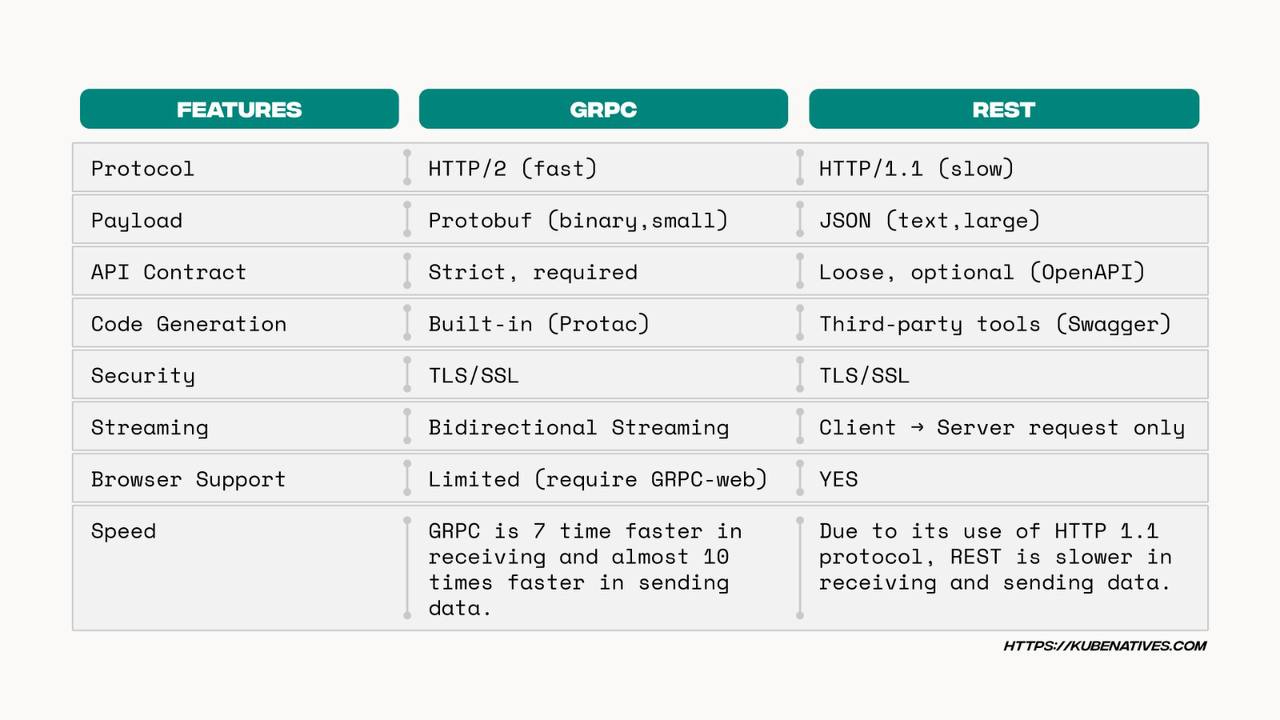
HTTP/2’s multiplexing lets multiple streams share a connection, slashing latency. Headers are compressed with HPACK, and payloads use Protocol Buffers (protobuf), a binary serialization format that’s both compact and strongly typed.
Beyond unary calls, gRPC supports bidirectional streaming, server push, and flow control—features REST can only dream of without awkward hacks like WebSockets.
Takeaway: REST’s simplicity is shackled to HTTP/1.1’s limits unless you force an upgrade. gRPC’s HTTP/2 foundation is a performance leap, but it demands you buy into its ecosystem.
Serialization: JSON vs. Protobuf—Size Isn’t Everything
REST + JSON: Human-readable, flexible, and ubiquitous. But JSON’s text-based nature bloats payloads—redundant keys and whitespace pile up fast.
Parsing is CPU-intensive, especially for nested structures. Schema evolution? You’re on your own—REST doesn’t enforce contracts, so versioning means manual hacks (e.g., /v2/api).
gRPC + Protobuf: Binary, compact, and schema-driven. Thanks to field tags and no fluff, a 1MB JSON payload might shrink to 200KB in protobuf. Parsing is blazing fast—protobuf compilers generate optimized code in your language of choice (Go, Java, Python, etc.).
Backward compatibility? Built-in, with optional fields and explicit versioning. Downside: debugging raw protobuf is a hex-dump nightmare without tools.
Edge Case: For tiny payloads (<1KB), JSON’s overhead barely matters. But scale to millions of requests with complex data (e.g., geospatial structs or ML inference outputs), and protobuf’s efficiency is a game-changer. REST can adopt binary formats like Avro or CBOR, but it’s rare and lacks gRPC’s native tooling.
Performance: Latency, Throughput, and Real-World Loads
REST: HTTP/1.1’s sequential nature kills it in high-latency networks—each request waits its turn.
Even with HTTP/2, JSON parsing and lack of streaming mean throughput caps out early. A benchmark with 10k concurrent clients might hit 500ms latency on a REST endpoint returning a 5MB payload.
gRPC: HTTP/2 multiplexing + protobuf = lower latency and higher throughput. That same 5MB payload, shrunk to 1MB, might clock 100ms under identical load. Add bidirectional streaming, and gRPC handles real-time use cases (e.g., live telemetry) REST can’t touch without bolted-on solutions.
Reality Check: gRPC’s wins shine in microservices talking over fast internal networks. Over the public internet with spotty clients? TLS handshakes and packet loss dilute the gap. REST’s caching (via HTTP headers like ETag) can still outpace gRPC for read-heavy workloads—gRPC’s caching story is weaker without custom middleware.
Contract Enforcement & Developer Experience
REST: Loose and forgiving. No formal schema means rapid prototyping but fragile integrations.
OpenAPI specs help, but they’re optional and often lag behind code. Error handling? A free-for-all—200 OK with a hidden error object is all too common.
gRPC: Protobuf enforces a strict contract. You define .proto files, generate client/server stubs, and mismatches are caught at compile time.
Errors are typed (e.g., google.rpc.Status), forcing discipline.
Downside: iterating on .proto files mid-project can ripple through your codebase—REST’s looseness avoids that pain.
Pro Tip: gRPC’s codegen is a double-edged sword. A Go service talking to a Python client is seamless—until you need to tweak a field type. REST’s “ship it and pray” vibe suits chaotic startups;
gRPC demands upfront planning.
Operational Overheads: Deployment & Monitoring
REST: Runs anywhere HTTP does. Load balancers, CDNs, and API gateways (NGINX, Kong) love it.
Monitoring’s a breeze—tools like Prometheus scrape /metrics endpoints natively. Debugging? Curl a URL and you’re golden.
gRPC: Needs HTTP/2 support end-to-end—proxies or LBs stuck on HTTP/1.1 (looking at you, older AWS ALBs) choke it. TLS is near-mandatory for security, adding setup cost.
Monitoring requires gRPC-specific interceptors (e.g., OpenTelemetry integration). Debugging? Decode protobufs or bust.
Gotcha: gRPC’s unary calls mimic REST, but streaming breaks traditional request logging. A single connection might handle 10k messages—your observability stack better adapt.
Niche Use Cases: Where Each Shines
REST
Public APIs: Browser-friendly, cacheable, and battle-tested (e.g., Stripe’s API).
CRUD-heavy apps: Mapping resources to URIs feels natural.
Heterogeneous clients: No one’s forcing protobuf on a random IoT device.
gRPC
Microservices: Low-latency inter-service chatter (e.g., Netflix’s backbone).
Streaming: Real-time feeds (e.g., financial tickers, game servers).
Polyglot systems: Generated stubs unify diverse languages under one schema.
The Deep Cut: Trade-Offs You Won’t See in Docs
REST’s Hidden Cost: Scaling statelessness means chatty clients or fat payloads. HATEOAS (REST’s “true” form) is a unicorn—nobody uses it, leaving you with ad-hoc designs.
gRPC’s Dark Side: Protobuf’s rigidity bites during rapid pivots. Browser support via gRPC-Web is a kludge—expect proxy hell. And if your team’s not bought in, the learning curve breeds resentment.
The Verdict: Pick Your Poison
REST is your trusty hammer—good enough for most nails, forgiving when you miss. Use it when time-to-market trumps optimization or when clients are unpredictable.
gRPC is a precision laser—overkill for small jobs, indispensable for big ones. Bet on it when performance is non-negotiable and you control both ends of the wire.
If you find this newsletter valuable and want to learn more, consider becoming a paid subscriber.
As a paid subscriber, you will receive exclusive weekly deep dive articles and access to DevOps coding challenges.